Why Does Lash Glue Turn White? How to Prevent “Blooming” and Ensure 8-Week Retention.
Introduction
Every professional lash artist has faced the dreaded “white residue” on a fresh set of extensions. Known in the industry as “Blooming” or “Shock Curing,” this phenomenon not only ruins the aesthetic of your work but can also lead to poor retention. In this guide, we’ll explore why this happens and how the OLYLASH 6610 formula is engineered to eliminate this issue.
1. What Causes Lash Glue to Turn White?
The scientific term for those white patches is Adhesive Blooming. It occurs when the liquid cyanoacrylate (the main ingredient in lash glue) evaporates and reacts with excessive moisture in the air before it has fully cured on the lash.
- High Humidity: If your salon is too humid (>60%), the glue cures too fast, trapping vapors on the surface.
- Mistaken Aftercare: Clients splashing water on their lashes too soon after the appointment.
- Excessive Use of Nano-Misters: Using a mister too close or for too long.
2. Expert Tips to Prevent Blooming
To maintain a seamless, carbon-black finish, follow these professional protocols:
- Control Your Environment: Keep your workspace humidity between 45%–55%.
- Proper Isolation: Ensure the natural lash is clean and dry before application.
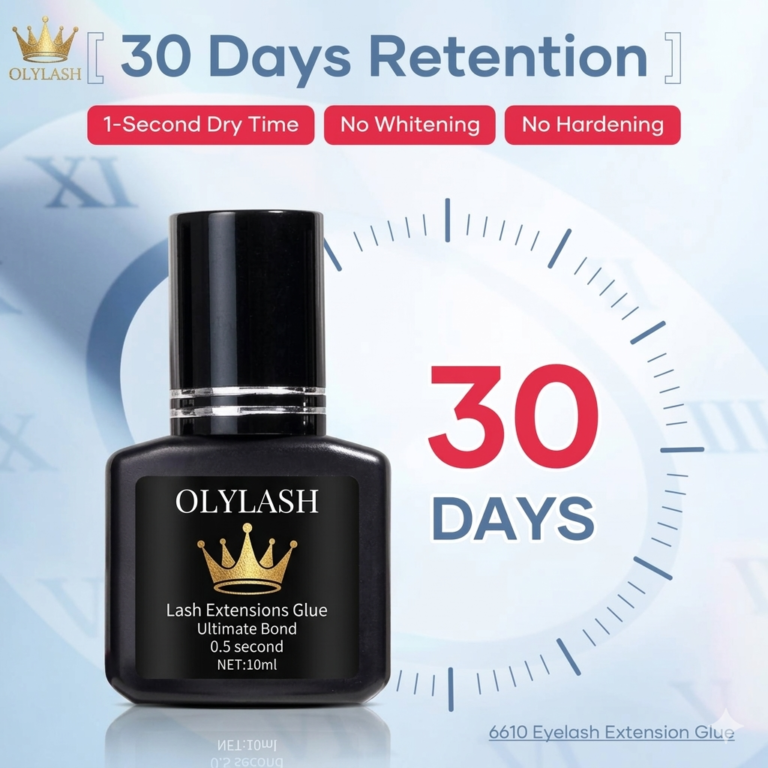
- Choose the Right Adhesive: Use a high-quality, stable formula like OLYLASH 6610, designed with anti-blooming technology.
3. Why OLYLASH 6610 is the Solution for Pro Artists
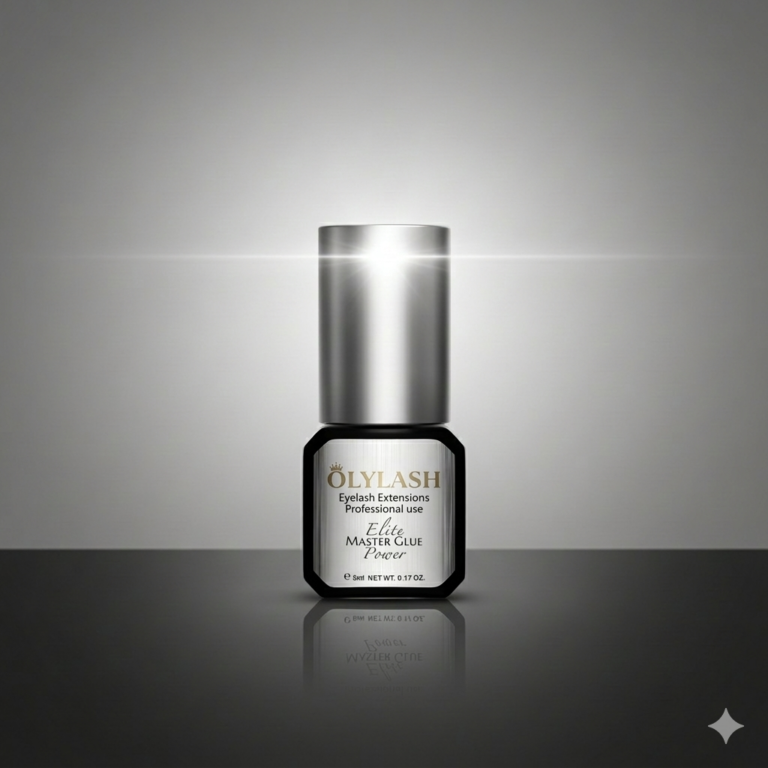
At the OLYLASH Factory, we developed the 6610 Eyelash Extension Glue specifically to solve the common frustrations of master lash technicians.
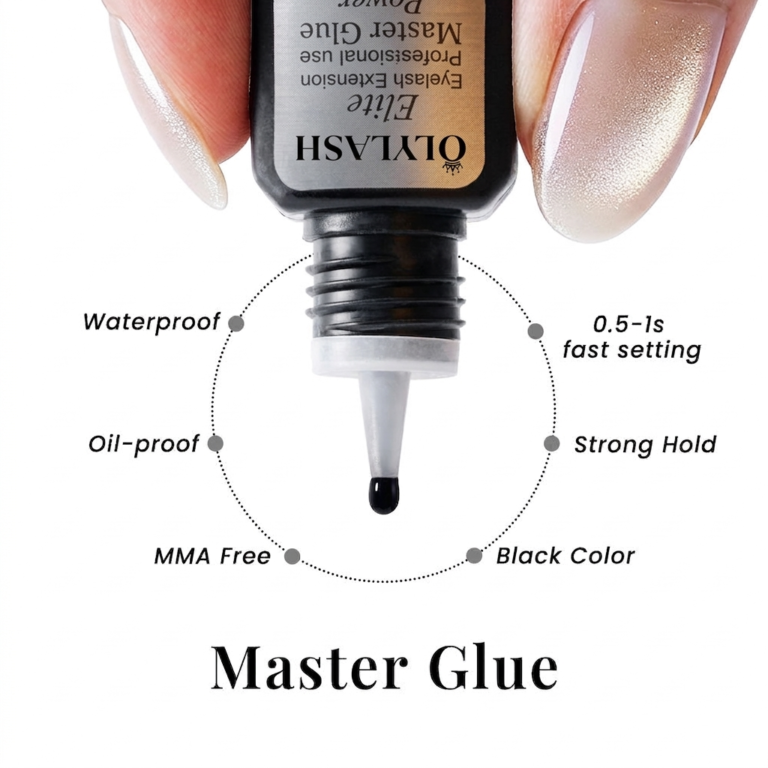
- Anti-Whitening Formula: Engineered to minimize vapor evaporation, ensuring a crystal-clear or deep black bond every time.
- 1-Second Instant Cure: Optimized for speed without the risk of shock curing.
- Waterproof & Oil-Resistant: Once cured, the bond is incredibly resilient, offering up to 8 weeks of retention.
Conclusion
Don’t let “white glue” damage your salon’s reputation. By controlling your environment and switching to a premium adhesive like OLYLASH, you can provide flawless, long-lasting results that keep clients coming back.
FAQ: Troubleshooting Lash Glue Blooming
Q1: Why does my lash extension glue turn white immediately?
A: This is called “Shock Curing.” It happens when the adhesive is exposed to excessive moisture (high humidity, watery eyes, or using a nano-mister too close) before it has properly cured. The surface hardens too fast, trapping vapors and creating a white residue.
Q2: Can I fix lashes that have already turned white?
A: Unfortunately, once the glue has “bloomed,” the white residue cannot be wiped off safely. You should professionally remove the affected extensions and apply new ones after stabilizing the room’s humidity and ensuring the natural lashes are bone-dry.
Q3: Does “White Glue” affect the retention of the lashes?
A: Yes. Blooming usually indicates that the curing process was unstable. This often results in a brittle bond, which can lead to premature shedding. Using a specialized formula like OLYLASH 6610 significantly reduces this risk.
Q4: What is the ideal humidity for OLYLASH 6610?
A: For optimal performance and a seamless black finish, we recommend a salon humidity of 45% – 55%. If your environment is naturally humid, our 1-second fast-dry formula helps lock the bond before moisture can cause blooming.
Q5: How can I prevent my clients’ lashes from turning white after they leave?
A: Advise clients to avoid steam, heavy exercise, or splashing water on their face for at least 24 hours. Alternatively, use a professional Lash Bonder immediately after the set to polymerize the glue instantly and seal in the vapors.